

En
- En
- عربي
- 한국어
- Malay
- ภาษาไทย
- IndonesiaName
- Tiếng Việt
NEWS CENTER
NEWS CENTER
Detailed Explanation of the Processing Flow for Aluminum Coil Raw Materials
2025-09-29 16:38:49
Click:
“
As a fundamental industrial material, the quality of aluminum coils hinges on the meticulous control of the raw material processing flow. From raw aluminum materials to finished coiled aluminum sheets, every process step directly impacts the aluminum coil’s purity, thickness precision, and mechanical properties. Combining industry general standards and processes, YI-RIVER breaks down the complete processing chain of aluminum coil raw materials from "aluminum ingots" to "finished aluminum coils,"
”
As a fundamental industrial material, the quality of aluminum coils hinges on the meticulous control of the raw material processing flow. From raw aluminum materials to finished coiled aluminum sheets, every process step directly impacts the aluminum coil’s purity, thickness precision, and mechanical properties. Combining industry general standards and processes, YI-RIVER breaks down the complete processing chain of aluminum coil raw materials from 'aluminum ingots' to 'finished aluminum coils,' helping you clearly understand the underlying production logic.
I.Raw Material Preparation: Choosing the Right 'Starting Point' Is Fundamental
The first step in aluminum coil raw material processing is selecting suitable aluminum raw materials—with industrial aluminum ingotsas the core. The purity and composition of the ingots must be determined based on downstream requirements:
For producing high-purity aluminum coils (e.g., for packaging and electronics), pure aluminum ingots with a purity of ≥99.5% (such as 1060 series, 1100 series) are required;
For producing high-strength aluminum coils (e.g., for construction and automotive sectors), aluminum alloy ingots with added elements like magnesium and manganese (such as 3003 series, 5052 series) are used.
YI-RIVER conducts composition testing on aluminum ingots at the raw material stage to prevent excessive impurities (e.g., excessive iron or silicon content) from affecting subsequent processing quality.
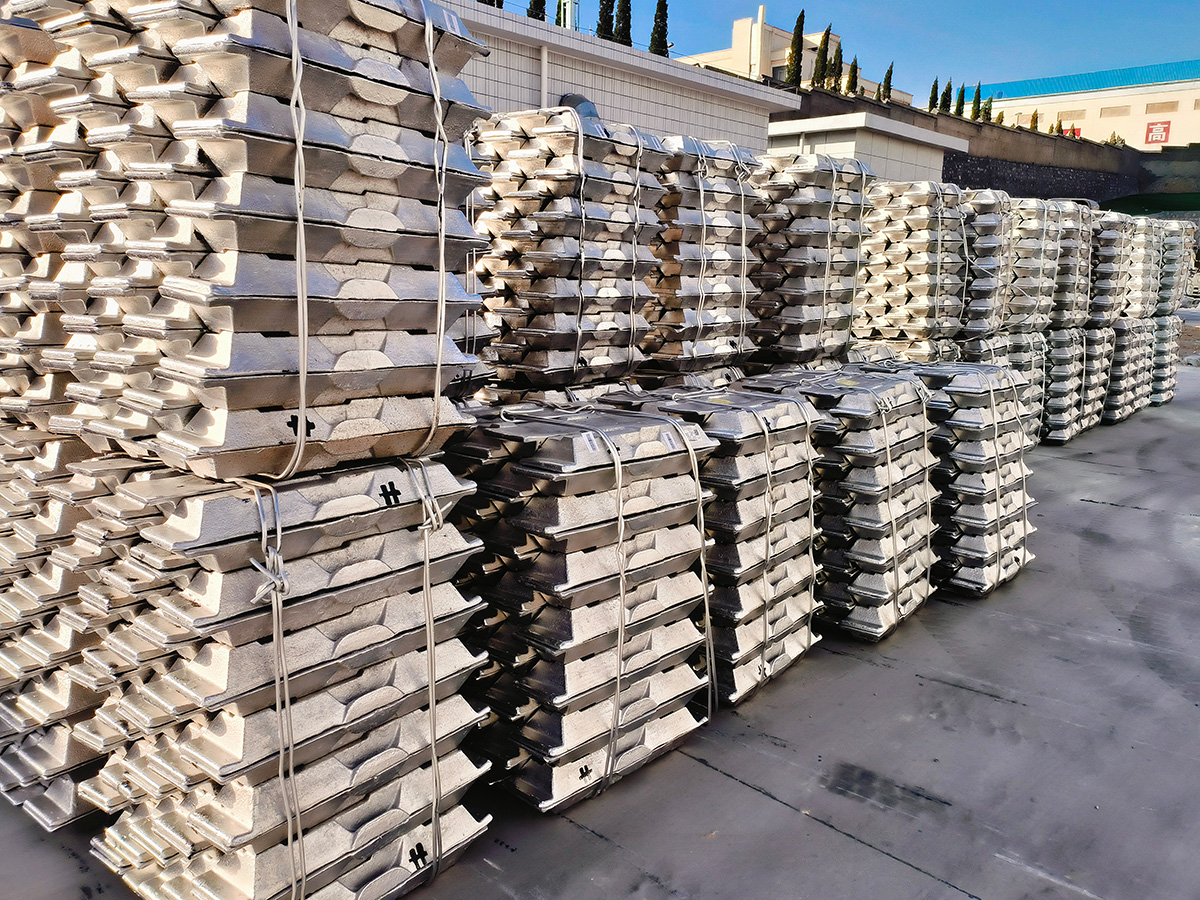
II.Melting and Impurity Removal: Purifying the Aluminum Liquid
The selected aluminum ingots are converted into molten aluminum liquid via a melting furnace. The core of this step is 'impurity removal and purification' to prevent impurities from impairing the aluminum coil’s toughness and corrosion resistance:
Heating and melting: Aluminum ingots are fed into a natural gas or electric heating melting furnace, where they melt into a liquid state at a temperature of around 660°C;
Degassing and slag removal: Inert gas (e.g., nitrogen) is blown into the aluminum liquid to absorb hydrogen (preventing bubbles in the finished product); meanwhile, slag remover is added to coagulate impurities like metal oxides into slag, which is then removed via slag skimming equipment;
Composition fine-tuning: Based on the material requirements of the target aluminum coil, a small amount of alloying elements is added (e.g., manganese for producing 3003 series aluminum coils) to ensure the aluminum liquid composition meets precise standards.
III.Finishing Treatment: Preparing Aluminum Coils for 'Qualified Delivery'
After cold rolling, the aluminum coils undergo finishing processes to optimize their appearance and dimensions, ensuring they meet downstream application requirements:
Surface cleaning: Residual oil and oxide films from cold rolling are removed via alkaline cleaning and pickling, followed by water rinsing and drying to ensure a clean aluminum coil surface;
Straightening and edge trimming: A leveler is used to adjust the flatness of the aluminum coils (preventing warping), while a slitting machine trims irregular edge parts to ensure uniform aluminum coil width;
Finished coiling: Finally, a coiler winds the aluminum coils into finished coils of standard diameter. Labels indicating material, thickness, specifications, etc., are attached, and the coils are then stored in warehouses for sale.
From aluminum ingots to finished aluminum coils, the precision control of each process step directly affects the final product’s user experience—for example, incomplete melting and impurity removal can cause the aluminum coil to crack easily, while uneven thickness during cold rolling can affect downstream cutting precision. Throughout the entire processing flow, YI-RIVER ensures each roll of aluminum raw material meets industry standards through three-layer control: raw material testing, online monitoring, and finished product sampling inspection. If you need to select suitable aluminum coil raw materials for specific scenarios (e.g., construction, packaging), you can obtain specification recommendations through YI-RIVER’s official channels to better match raw material performance with processing needs.

IV. Cold Rolling Forming: Precisely Controlling Thickness and Hardness
Cast-rolled coils undergo multi-pass rolling via a cold rolling mill to gradually reach the target thickness and mechanical properties. This is the core step determining the final precision of aluminum coils:
1. Multi-pass cold rolling: First, the cast-rolled coils are rolled to a thickness of 2-3mm by a roughing mill, then further rolled to 0.1-2mm by a finishing mill (the specific thickness is adjusted based on downstream needs—e.g., aluminum coils for packaging are usually 0.1-0.5mm thick, while those for construction are mostly 0.8-1.5mm thick);
2. Intermediate annealing (as needed): If the aluminum coil becomes brittle due to 'work hardening' during cold rolling, low-temperature annealing (e.g., 150-250°C) is interspersed to restore its ductility and ensure smooth subsequent rolling;
3. Thickness testing: After each cold rolling pass, the thickness is monitored by an online thickness gauge, with the error controlled within ≤0.01mm to ensure uniform aluminum coil thickness.

Author:
YUXIN New Materials Technology Co., Ltd









PRODUCT
Furnace
Cast-rolling
Cold Rolling
Tension Correction
Cut
Annealing Oven
Cast Aluminum Coil
Company Introduction
Factory Display
Honors And Qualifications


洛阳宇信新材料科技有限公司
Copyright © 2025 Luoyang Yuxin New Materials Technology Co., Ltd. All Rights Reserved. SITEMAP

